
Tag: featured
-
MISSING DATA (Jungs de Almeida et al, 2024)
This article explores the concept of “missing data” from a political and social perspective, rather than merely a technical one. While traditional definitions of missing data typically refer to information that is literally missing or incomplete, the approach taken here, aligned with artist and educator Mimi Ọnụọha, considers missing data as that which does not…
-

Geographies of missing data: Spatializing counterdata production against feminicide (D’Ignazio et al, 2024)
Feminicide is the murder of cisgender and transgender women and girls for gender-related reasons. It reflects systems of patriarchal and racialized oppression and reveals how territories and socioeconomic landscapes shape everyday gender-based violence. In recent decades, many community data production initiatives have emerged with the goal of monitoring this extreme yet often invisible phenomenon. We…
-

Missing data and counterdata (Cruxên et al, 2024)
Cruxên, I., Jungs de Almeida, A., Klein, L. F., & D’Ignazio, C. (2024). Dados Ausentes e Contradados. Em S. Mariano (Ed.), Informe Feminicídios no Brasil 2023: Monitor de Feminicídios no Brasil. Márcio Ferreira de Souza. https://dspace.mit.edu/handle/1721.1/157846?show=full O Monitor de Feminicídios no Brasil (MFB) é uma iniciativa do Laboratório de Estudos de Feminicídios no Brasil, formado…
-

The revolution shall not be automated: On the political possibilities of activism through data & AI (Cruxên, 2024)
Reflecting on the “AI revolution”, Isadora Cruxên draws on her experience working with activists in the collaborative project Data Against Feminicide to argue that the politics of data and AI is, at heart, a politics of knowledge production. She invites us all to take part in this conversation. Cruxên, I. (2024, mayo 28). The revolution…
-

Data artivism and feminicide (Suárez Val et al, 2023)
Suárez Val, H., D’Ignazio, C., Acosta Romero, J., Teng, M. Q., & Fumega, S. (2023). Data artivism and feminicide. Big Data & Society, 10(2). https://doi.org/10.1177/20539517231215356 Data has become a key format for activists to visibilizar (make visible/call attention to) and denounce social issues. Drawing on the concept of “artivism,” we name as data artivism those works…
-
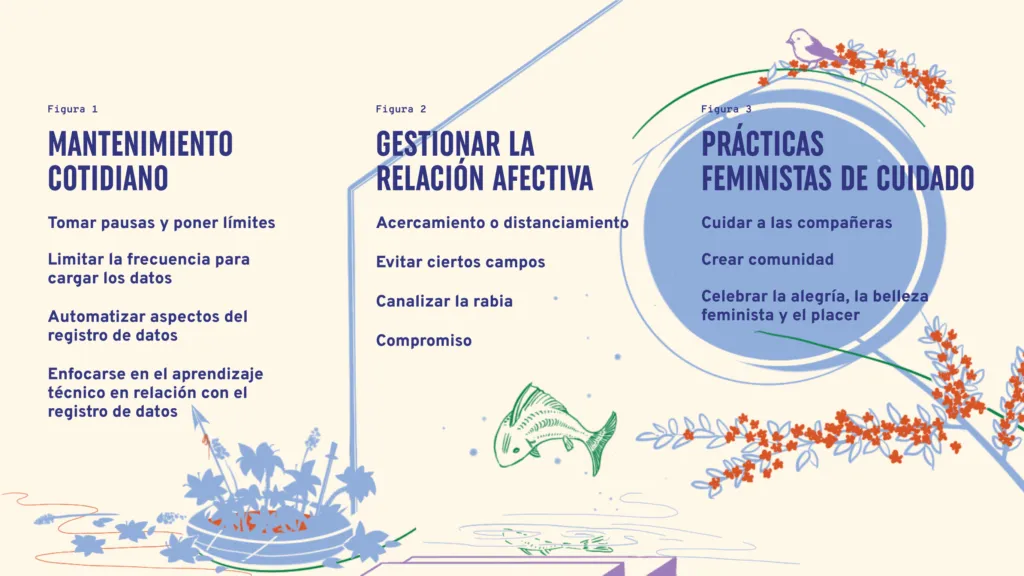
Feminicide data, emotional labor and self-care (Suárez Val et al, 2022)
Producing feminicide data has historically been an important feminist tactic to make gender-related violence visible and to draw attention to the lack of data from official sources. María Puig de la Bellacasa says, in relation to the production of knowledge, that “care” implies simultaneously the work of daily maintenance, an ethico-political commitment and the affective…
-
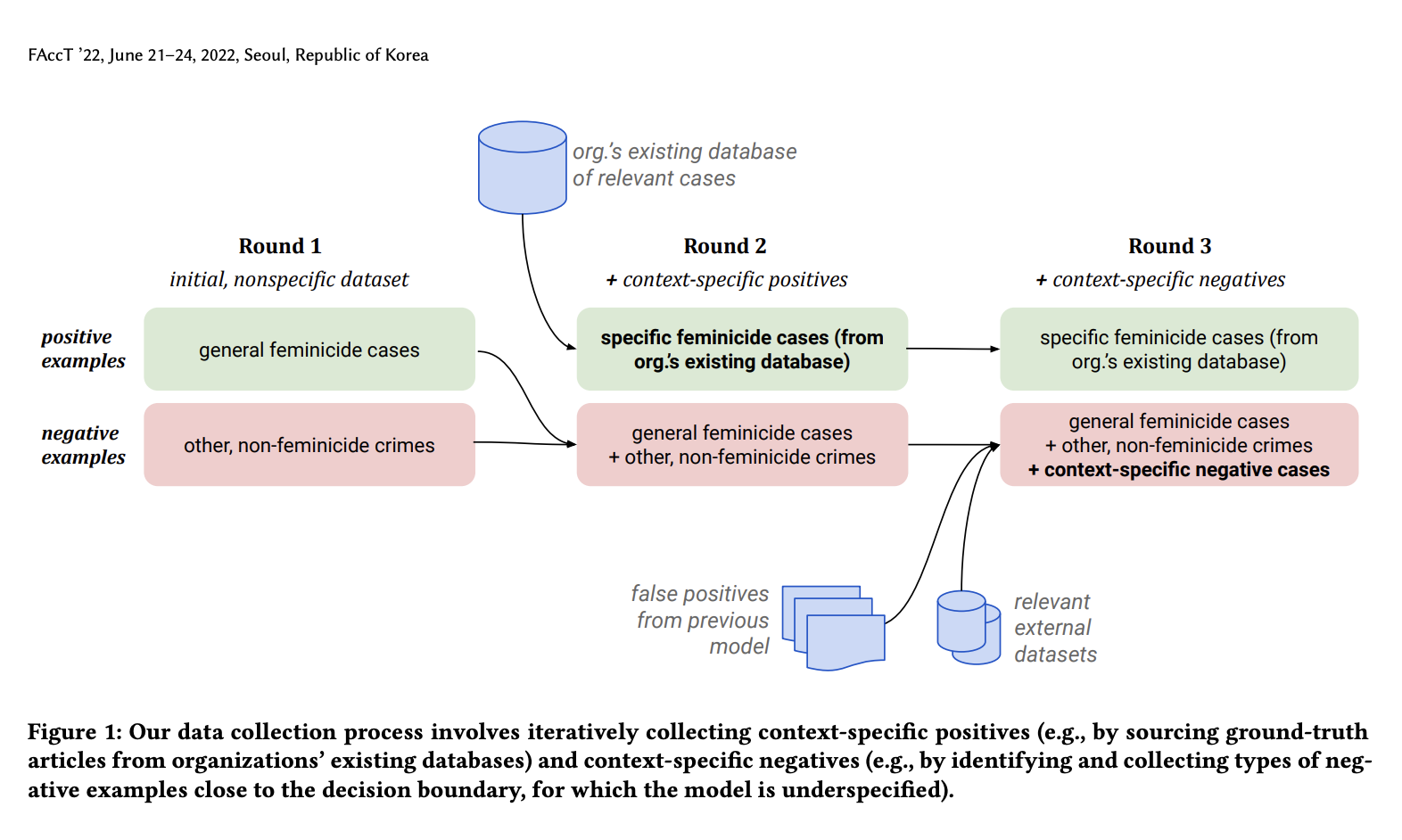
Towards Intersectional Feminist and Participatory ML: A Case Study in Supporting Feminicide Counterdata Collection (Suresh et al, 2022)
Data ethics and fairness have emerged as important areas of research in recent years. However, much work in this area focuses on retroactively auditing and “mitigating bias” in existing, potentially flawed systems, without interrogating the deeper structural inequalities underlying them. There are not yet examples of how to apply feminist and participatory methodologies from the…