
Category: Data and Technology in the Feminist Struggle
-
Technology and Anti-Feminicide Data Activists (Jungs de Almeida et al, 2023)
Data Against Feminicide project collaborates with Brazilian civil society organizations to develop digital technologies to support the struggle against feminicide. Jungs de Almeida, A., D’Ignazio, C., França, C., Cruxên, I., Kalil, M. E. X., Marques, R., Mariano, S., Negrão, T., & Siqueira, T. P. (2023, agosto 30). Tecnologia e Ativistas de Dados Contra o Feminicídio.…
-
Human-Centered Computing and Feminicide Counterdata Science (D’Ignazio, 2023)
Data about feminicide can be conceived as missing data – data that are neglected by authorities and underreported in official registries. Activists and civil society groups in Latin America and beyond are increasingly stepping into these gendered data gaps to undertake feminist counterdata science – an explicit challenge to the inadequate data practices of governments…
-
Feminicide Data Activism (Collectif Féminicides Par Compagnons ou Ex at al, 2023)
This chapter weaves together, as nodes in a network of care, the experiences of activists collecting feminicide data in France, Germany, Kenya, Kyrgyzstan, Mexico, Russia, the United States, and Venezuela. In our work, we draw from a long genealogy of feminist research and activism on femicide/feminicide and gender-related violence. To contextualise our practices, we draw…
-

Feminicide and counterdata production. A conversation with FAIR
Feminicide and counterdata production. A conversation between the DCF team and the Feminist AI Research Network (FAIR). ILDA, Data + Feminism Lab, Feminicidio Uruguay, Tierra Común, & Feminista AI Research Network (Producers). (2022, agosto 9). Feminicidio y la producción de contradatos [Video recording]. https://www.youtube.com/watch?v=Nhu8mBoBvXs
-
Feminicide data, emotional labor and self-care (Suárez Val et al, 2022)
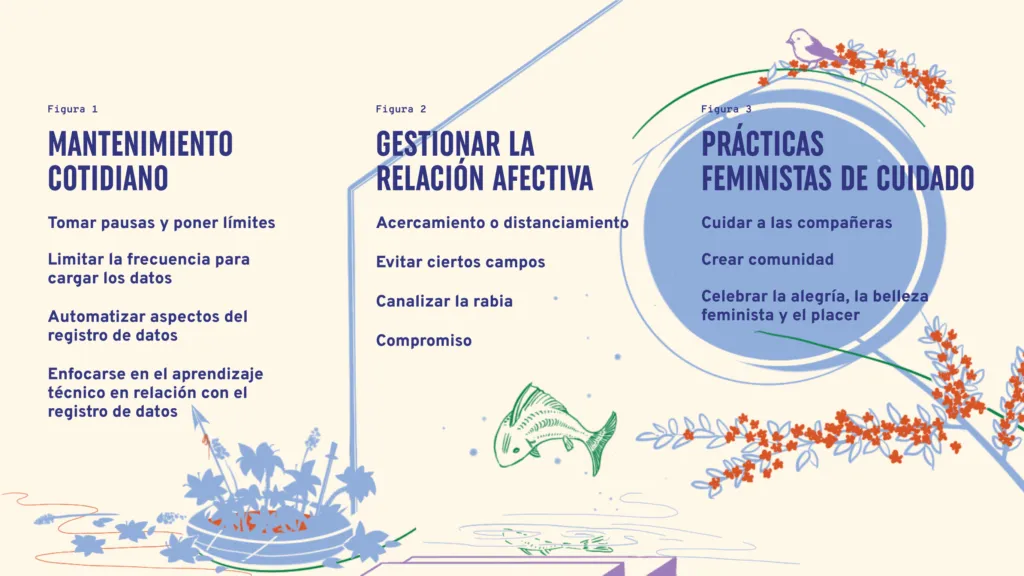
Producing feminicide data has historically been an important feminist tactic to make gender-related violence visible and to draw attention to the lack of data from official sources. María Puig de la Bellacasa says, in relation to the production of knowledge, that “care” implies simultaneously the work of daily maintenance, an ethico-political commitment and the affective…
-
Towards Intersectional Feminist and Participatory ML: A Case Study in Supporting Feminicide Counterdata Collection (Suresh et al, 2022)
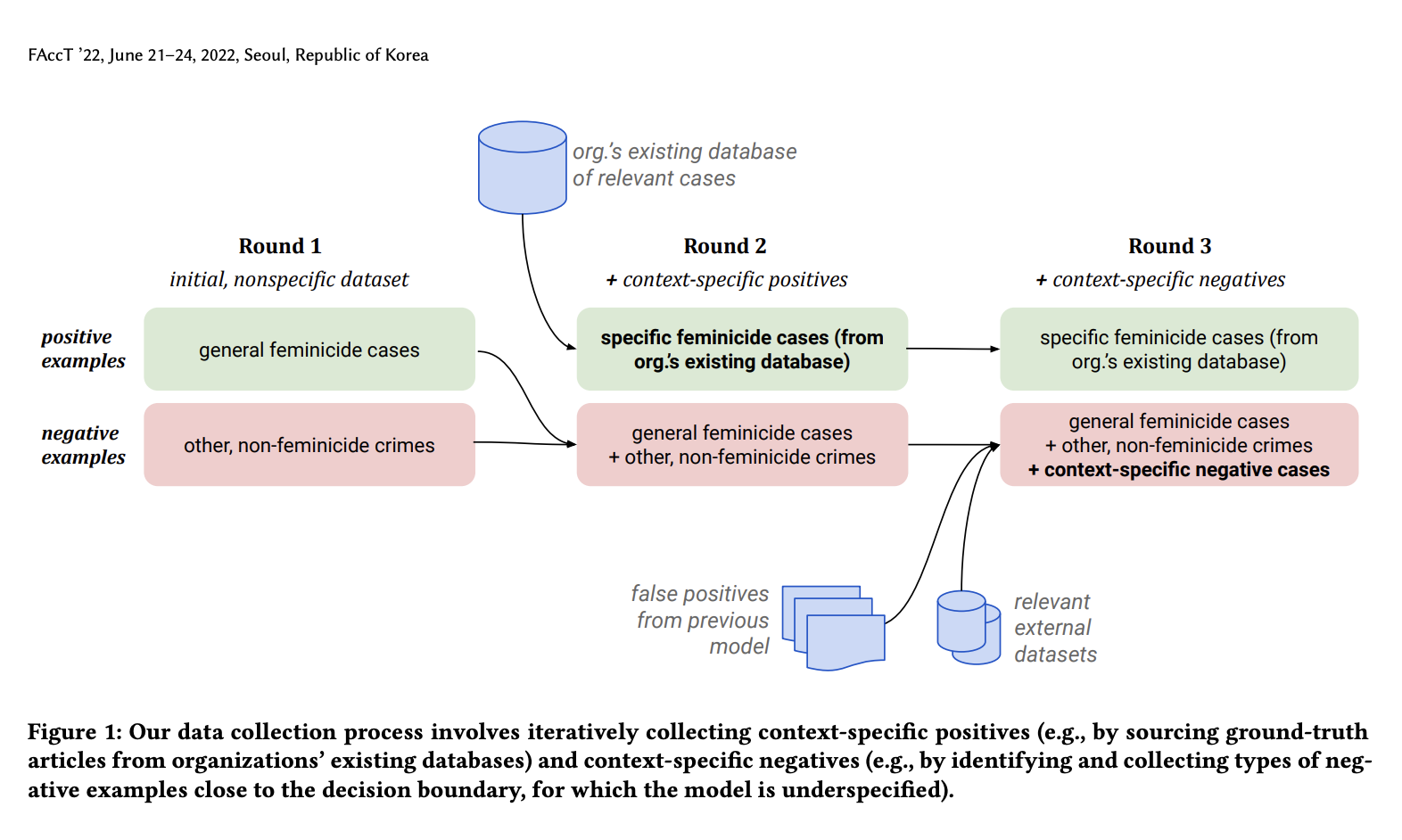
Data ethics and fairness have emerged as important areas of research in recent years. However, much work in this area focuses on retroactively auditing and “mitigating bias” in existing, potentially flawed systems, without interrogating the deeper structural inequalities underlying them. There are not yet examples of how to apply feminist and participatory methodologies from the…
-
News as Data for Activists: a case study in feminicide counterdata production (Bhargava et al, 2022)
Bhargava, R., Suresh, H., & Doğan, A. L. (2022). News as Data for Activists: A case study in feminicide counterdata production. 5. https://github.com/browninstitute/c-plus-j-website/raw/main/proceedings/Session9Group2.pdf News articles are an important source of data for recording and aggregating a range of social phenomena. In this paper, we ask if and how technology can support civil society activists who…
-
Affect Amplifiers: Feminist Activists and Digital Cartographies of Feminicide (Suárez Val, 2021)
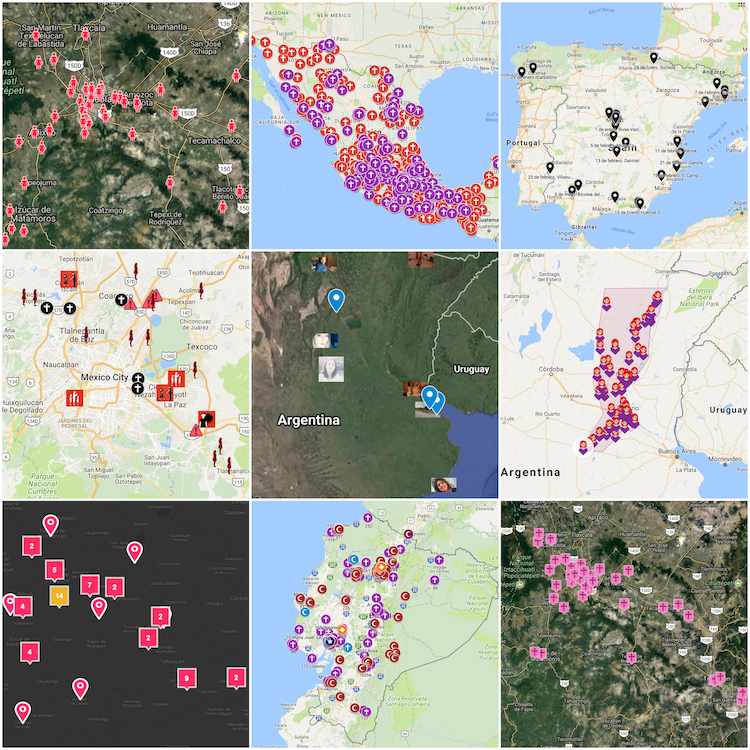
Feminicide, the gender-related violent deaths of women, is the tip of the iceberg in a continuum of violence that is “terrorizing women” in the Americas (Fregoso and Bejarano 2010)1 . As well as street protests, performances, hashtag campaigns and many other online and offline actions, feminist activists across Latin America have been denouncing feminicide by…
-
Data against Feminicide (Fumega, 2021)
Data is not the solution to the problem but without the right data, without giving visibility to the “missing data”, it is impossible to understand and to think about solutions. Fumega, S. (2021). Data against Feminicide. Feminist AI. https://feministai.pubpub.org/pub/data-against-feminicide/release/1 Enlace externo
-
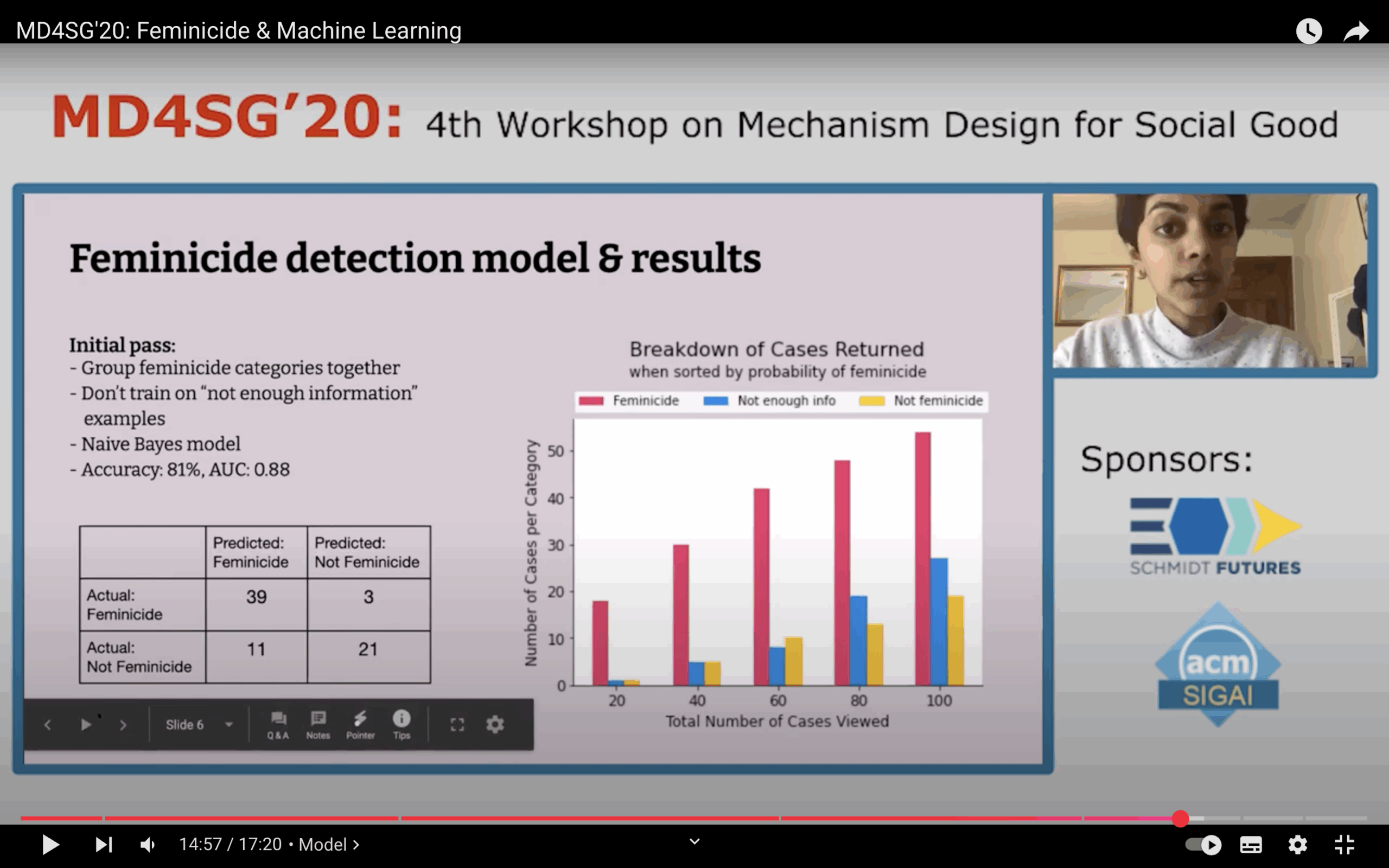
Feminicide & Machine learning: Detecting Gender-based Violence to Strengthen Civil Sector Activism (D’Ignazio et al, 2020)
Gender-related violence against women and its lethal outcome, feminicide, are a serious problem in Latin America and the Caribbean (LAC), as they are in the rest of the world. Although governments have passed legislation criminalizing feminicide, these laws have not been accompanied by relevant policy nor by robust data collection that measures the scope and…